Lately, I’ve been thinking a lot about what we build.
Sometimes we build ideas.
Sometimes we build communities.
Sometimes we build ourselves.
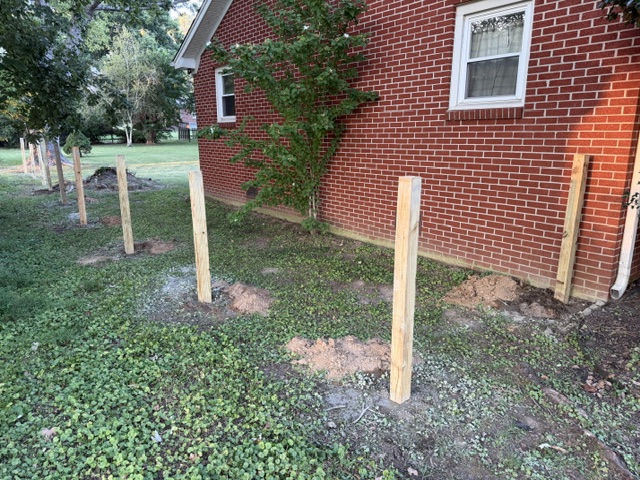
And sometimes… we literally build a fence.
I recently traveled back to Tennessee to spend some time at one of our properties there. Part of the mission was decidedly unglamorous: there was work to do, including building a fence.
There’s something I’ve always appreciated about physical work. My professional life involves a tremendous amount of thinking—teaching, writing, research, curriculum, leadership, consulting, meetings, strategy, and conversations about human connection.
Building a fence is different.
You measure.
You dig.
You level.
You sweat.
And at the end of the day, you can physically stand back and see what your hands accomplished.
There is clarity in that.
And somewhere between posts, boards, Tennessee soil, and sore muscles, I started thinking about boundaries.
Good Fences Don’t Have to Disconnect Us
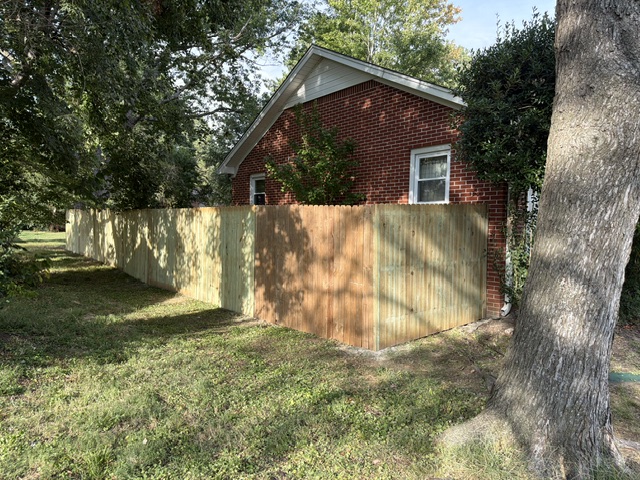
We tend to talk about boundaries as though they are barriers.
Maybe they aren’t.
A good fence doesn’t necessarily say, Stay out.
Sometimes it simply says:
This is where I begin.
This is where you begin.
And now we can figure out how to meet one another honestly.
I’ve spent much of this year thinking, researching, writing, and speaking about connection. I’ve been examining social capital academically, building international partnerships professionally, preparing new presentations and leadership programming, and continuing the long process of bringing Starving for Connection into the world.
And personally, I’ve been doing my own work.
All of it keeps bringing me back to the same realization:
Connection without boundaries isn’t necessarily connection.
Sometimes it’s enmeshment.
Sometimes it’s obligation.
Sometimes it’s performance.
Healthy connection requires two people who can remain themselves while choosing to meet one another.
Maybe a good fence doesn’t weaken connection.
Maybe it makes the gate more meaningful.
Returning to Tennessee
Going back to Tennessee always does something to me.
I have lived in New England for years now. I’ve traveled around the world. I’ve built a career in higher education that has taken me into classrooms, boardrooms, conferences, universities, and communities I could never have imagined when I was younger.
But Tennessee holds an earlier version of me.
The cadence is familiar.
The landscape is familiar.
There are people there who knew me before the titles, books, international travel, and professional accomplishments.
Returning reminds me that growth doesn’t require rejecting where we came from.
We can become something new while remaining connected to our roots.
In fact, I increasingly believe we need both.
We need roots and branches.
Roots remind us who we are.
Branches allow us to discover who we might become.
Mabon and the Work of Men

This trip also existed alongside another meaningful moment for me: leading the Men’s Mysteries for Mabon as a Third Degree High Priest at Apple Oak Grove.
Mabon invites reflection on balance, harvest, gratitude, and preparation for the darker half of the year. It asks us to consider what has grown, what we have gathered, and what needs to be released.
That feels particularly relevant to conversations among men.
I’ve written before about my complicated feelings toward modern masculinity. Too much of what is presented to men today seems to exist at extremes.
Dominate.
Withdraw.
Perform.
Compete.
Don’t feel too much.
Don’t need too much.
Certainly don’t let anyone see uncertainty.
I don’t find much wisdom there.
The masculinity I’m increasingly interested in is grounded rather than performative.
Strong enough to protect and gentle enough to nurture.
Confident enough to lead and humble enough to listen.
Capable of establishing boundaries without building walls.
Willing to sit with other men and talk honestly about fear, responsibility, purpose, relationships, aging, love, loss, and the strange experience of trying to become better human beings.
Men need spaces for that.
We need ritual.
We need brotherhood.
We need accountability.
We need places where we aren’t required to perform masculinity for one another but can instead explore what being a good man actually means.
Leading Men’s Mysteries reminded me that creating those spaces is itself an act of service.
The Harvest Isn’t Always What You Expected
Mabon also has me thinking about harvest in a broader sense.
This has been a year of planting.
New academic responsibilities. New international relationships. New research. New speaking opportunities. New collaborations. Continued work on my book. Deeper exploration of myself and the relationships that matter to me.
Some of those seeds have grown quickly.
Others haven’t.
Some may never become what I initially imagined.
That’s part of the work too.
We have a tendency to judge our lives by the most visible harvest—the promotion, publication, contract, conference invitation, finished project.
But some of our most important growth happens underground.
A healthier routine.
A difficult realization.
A relationship deepening.
A boundary finally established.
An old wound understood differently.
A conversation where we choose vulnerability instead of armor.
Nobody applauds those moments.
But they change us.
Social Capital Is Something We Tend
Maybe that’s one of the things I’ve come to understand more deeply about social capital.
We talk about “building” networks, but relationships aren’t infrastructure we construct once and then walk away from.
They’re more like gardens.
They require tending.
Attention.
Reciprocity.
Patience.
Sometimes pruning.
Sometimes boundaries.
And sometimes simply sitting beside someone long enough for them to know they aren’t alone.
The older I get, the less interested I am in how many people I know.
I’m much more interested in how deeply we know one another.
That’s a very different measure of wealth.
What Are You Building?
So I’ve returned from Tennessee with a fence built, a spiritual season marked, time spent in community, and another collection of thoughts rattling around in my head.
And I keep returning to one question:
What am I building?
Not just professionally.
Not just financially.
Not just academically.
What am I building in the people around me?
What am I building in my family?
What am I building in my communities?
What am I building within myself?
And perhaps most importantly:
Will the things I’m building help people feel more connected—or less?
The fence in Tennessee will weather.
Titles will change.
Presentations will end.
Books will eventually sit on shelves.
But the relationships we tend, the communities we strengthen, the people we help feel seen, and the love we put into the world have a strange way of continuing beyond us.
Maybe that’s the harvest worth paying attention to.
And as the wheel turns again, I’m grateful for what has grown.
I’m grateful for what I’ve learned.
And I’m looking forward to tending whatever comes next.
— The Social Capitalist

